Tuesday, June 24, 2014

Memorable Moments: Midsummer and Sankt Hans in Denmark

The ability to "experience things deeply" is part and parcel of what makes someone a Highly Sensitive Person.

Unfortunately, we often tend to hone in on the negative and painful experiences far more than the positive ones.

Today is June 24th. In my native Denmark, it is the celebration of "Sankt Hans Eve," a form of midsummer celebration mostly observed in Scandinavia and Northern Europe... for me, this day offers one of the consistently positive memories from growing up.

What was special about June 24th? Aside from marking almost the longest day of the year in Denmark-- the sun rises around 4:30 in the morning and sets around 10:00pm; it never gets truly dark-- this time also meant that school was out for the summer and I had a small measure of freedom to be myself.

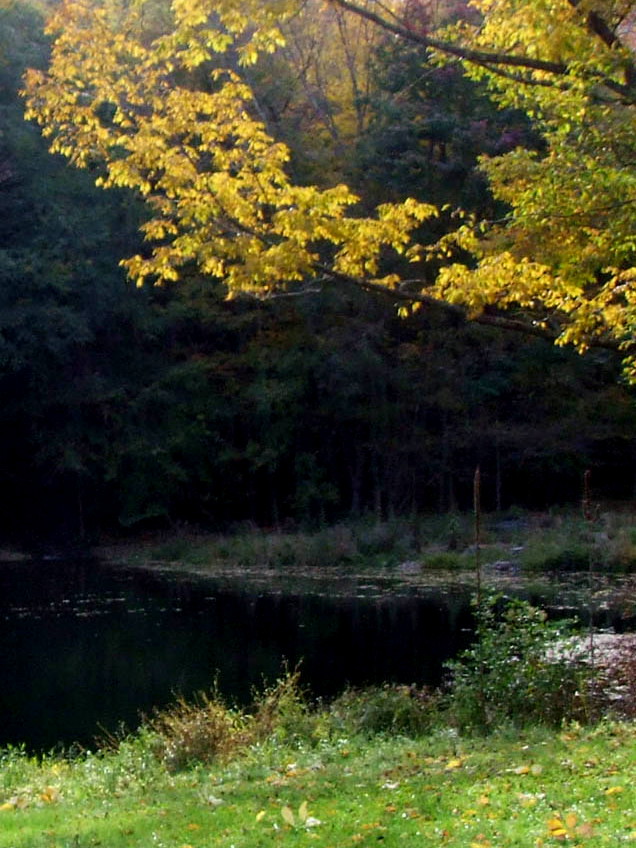
Sankt Hans eve, itself, had its own kind of magic as thousands of bonfires are lit all across the country-- many on beaches-- and communities come together and the world somehow felt "a little more peaceful," even if just for one day. The photo above was taken during a summer visit to Denmark, in June 2011.

As a teenager, I would ride my bicycle home from the beach late at night...often at 1:00 in the morning... the scent of woodsmoke hanging in the air from all the fires; hollows in fields filled with low lying mists and the world would feel like it was of another era, or maybe not our world, at all. The northern sky would be orange and pink because the sun only dips a few degrees below the horizon and on cloudless nights it was light enough that I could still see colors.

As much as anything, it felt like I was somehow "connected" to the world around me.

And, for a moment or two, the world felt OK.

Saturday, March 22, 2014

HSPs, Travel & Preparing for the Unknown

The late John Lennon once said "Life is what happens while you're busy making other plans."

A couple of years ago, Sarah and I spent a week in Taos, NM, attending the annual Labyrinth Society Gathering. I won't get into details about the event itself-- although Labyrinths are highly relevant to HSPs, in my opinion-- but the whole business of "going" got me to thinking about the issue of HSPs and travel.

In the course of my 15-odd years of being part of the global HSP "community," I have heard many highly sensitive people lament that travel is either very difficult for them, or they avoid it altogether, too concerned about dealing with the unfamiliarity of strange places, the discomfort of hotel beds and the general overstimulation that goes with planning and going on a trip.

It always surprises me a bit that there have not been dedicated books and web sites, specifically written about this topic. For a while, there was an "HSP Travel" blog on the web, but it ceased publication a few years back. A couple of HSP writers published short booklets about travel and "HSP-friendly" venues in their cities. Aside from that, nothing.

After the snow; Denver Airport, 10/26/2011
But I digress. There are a few simple things you can do, as an HSP, to make the traveling experience less taxing and more enjoyable.

One of the items on Dr. Elaine Aron's self-assessment for sensitivity reads: "Changes in my life shake me up." Another reads: "I make it a high priority to arrange my life to avoid upsetting or overwhelming situations."

Now, think about these two in the context of being an HSP and dealing with modern travel-- being in a strange location, dealing with flight delays and cancellations, and so forth.

Of course, you can't prepare for everything. Like flight delays caused by weather. Case in point: We thought that flying to Albuquerque via Denver would be a safe bet, in October. Alas, no! 

On our return flight, we ended up with major delays, due to an unexpected blizzard... causing us to miss one flight and have to wait five hours to connect with the next one.

Ultimately it was a good reminder that some things are just beyond our control... and then the best thing we can do is just settle in and relax; pacing endlessly or getting overwrought with worry will not make any difference. 

As an HSP, the best thing you can do is find a part of the terminal that has fewer people and settle in with a good book or-- if you're traveling with your laptop computer-- use the airport's free wifi network to catch up on some correspondence, write in your journal, or even play puzzle games or whatever else you might do online during slack times.

Remember, there are certain things you simply can't change (like flight schedules and the weather); focus on the ones you can!

Safe travels!

Monday, February 17, 2014

Interpreting Reality: HSPs and Overcoming Our Negative Perceptions

There is a saying-- alas, I forget where it comes from-- that we should "not attribute to malice what can merely be attributed to ignorance."

It seems to me that we HSPs "do battle" extensively with the negative voices inside our heads. That is, we often bring suffering to ourselves because of how we choose to interpret what others say and think about us. For example, someone might say "You're very quiet!" and we immediately interpret what basically amounts to "just an observation" as something negative; as feeling judged; that our quietness is a flaw, of some kind. But if you pause and think about it-- especially if these words were spoken by a very talkative person-- we could turn that right around and say "You're very noisy!"

I will not deny that our culture-- especially here in the US-- has its share of prejudices against aspects of human character that fit many HSPs... but there's a limit. Often, people's observations about others are little more than that: Observations. Not "judgments," not "attempts to make us feel bad." In truth, we often do a far better job of making ourselves feel bad than anyone else can, because we set off a cloud of "swirling negative thoughts" in response to what someone else says.

Recently, I did an exercise at a workshop which involved examining words that had often been used to describe me during childhood and my youth... and which I could safely say had always "bothered" me. Central to the exercise was examining each descriptive word objectively and re-framing-- in a more positive light-- how these words described me (or not). Here's a list of some of the words I came up with:

Shy
Quiet
Polite
Aloof
Distant
Daydreaming
Cautious
Serious
Detached
Silent
Observant
Compliant
Fearful
Retiring

Then I started off by examining the term "shy," and looking at it objectively, as a way people might have seen me. Whereas I am not really interested in writing a long treatise on the deeper psychological meaning of each of these words, I'll run through a quick examination and re-stating of some of them.

Was I shy? Not really. I was just quiet. I had no actual social fear or hesitance around people-- I was just easily overstimulated by more than one person at a time, so I often kept to myself.

Was I quiet? Absolutely. Loudness literally hurt my ears; hurt me inside-- if one of my schoolmates set off firecrackers, it felt like I was being hit over the head with a baseball bat. A neighbor boy had one of those English policeman's whistles... when he blew it, it literally felt like my eardrums were being shredded. So I avoided making the noises that hurt.

Was I polite? Politeness meant I would not "stir up" people's energies, and thus not have to deal with subsequent "loudness," which I didn't like. Let's note that "polite" is typically a positive word, and when we assign a negative meaning to it, what we're actually doing is making an interpretation and judgment about someone else's tone of voice and delivery.

Was I aloof? That's a matter of perception. Objectively, what people perceive as "aloof" is generally related to an unwillingness to engage at their level. "Aloof" is a bit like soft-shoeing around the harsher term "arrogant." In a childhood context, let's say someone's idea of a good time is banging on metal trash cans with sticks... well, I would consider myself "not part of that" and back away... thereby perhaps appearing aloof. Was I "the opposite of bubbly and gregarious?" Yes, I was. But does it make me a "bad" person? Definitely not.

Distant? Daydreaming? Absolutely, on both counts. The external world felt incredibly rough and violent to me... my "inner landscapes" allowed me to create an alternate reality, in which things were just not as rough. It was a sanctuary, of sorts. I'll also add that "having a rich inner life" is one of the core attributes of high sensitivity. Nothing "bad" about that-- in fact these are little more than an unstructured offshoot of meditation, which is widely considered a positive an healing activity.

Cautious? Yes. Very cautious. One of the things I pause to remember about this is that HSPs process more deeply, and thus tend to be more capable of thinking through the consequences of an action taken, before taking the action. Compared to other children who acted purely from impulse, this would definitely come across as caution. If this seems unclear, let me offer an example: The non-HSP child says "Jumping off the roof looks like fun!" The thought process ends there; the child jumps without a second thought. The HSP child says "Jumping off the roof looks like it could be fun... but the pain of landing on those rocks would be worse than the fun of jumping, so I don't jump, or maybe I'll jump from somewhere else."

Serious? Yes, I believe I was. Most early pictures of me reveal a mostly somber demeanor. However, I'm not convinced this had much to do with being an HSP-- rather, it was a reflection of being raised in a family that frowned on "wild" or "childish" behavior, and expected children to behave like "little adults." Combine that with being a thorough introvert, and you end up with a little kid who just doesn't express very much.

Detached? I have considered this particular description at some length, and concluded that it was somewhat of a self-preservation mechanism. Detaching served me as a form of "non-engagement" that kept me from being in a constant state of overstimulation.

Silent? Yes, I was mostly silent. However, I will attribute this only in part to being an HSP, the other part being attributable to growing up in a family environment where "children might be seen, but should not be heard." I would also mention again that I was (and am) an introvert... and thus more of a listener than a talker.

Watching? That's an odd one. I've been told by many family members that I would just sit for hours and look at things, without necessarily trying to engage with them. From inside me, it felt like I was "filming" the world and storing it away for future reference. Just because something was "there" didn't mean I had to DO something with it.

Compliant? Absolutely. From everything I've been told, I was very rarely contentious... and mostly just did what I was told, without question. Of all the words on my list, this one is perhaps the one I struggled the most with, because compliance often meant that I allowed myself to be coerced into places and situations where I'd rather not be (or would get hurt), simply in service of keeping the peace and not upsetting those around me.

Fearful? Fear is one of the "inventory items" on my list of personal attributes I have worked the most on, in the course of a couple of decades of self-development. It's easy to get affronted and insulted when someone calls you fearful, but the truth is that I was fearful-- and governed by fear (some rational, some irrational) during the majority of my life. I think it is not uncommon for HSPs-- especially if they had difficult childhoods-- to start viewing the world through a lens of fear. After enough repetitions of "having an experience --> negative/painful outcome" it's only natural to become fearful or...

Retiring? Yes, I would often shy back from from many aspects of life. But in some ways, I have been able to reframe this characterization under the broader heading of "knowing my limits." Just how "bad" is it when I choose to not go to a loud concert because I know I will feel hugely overstimulated and my sensitive ears will hurt?

In the end, I found this particular exercise of "taking inventory" of descriptive words people have spoken about me during my life, that have-- and do-- "bother" me to be both productive and healing. As one of my spiritual Teachers once pointed out, our thoughts about something tend to be far worse than the actual "something," itself.

As HSPs, we can easily get "trapped" in the fact that something once "hurt us," without taking the time to have a deeper look and interpreting what happened. It is easy for us to focus on being hurt, rather than on the truth of the message that was shared with us. It is also easy for us to allow cultural labels to become our definition when it is actually WE who get to define ourselves.

Highly Sensitive Persons are a little bit different, and it does not serve us to obsess over "having stripes" when-- in fact-- we happen to be "zebras." Our task is to become the best zebras we can, not to try to become non-zebras!


What do YOU think? Do you have "descriptions" of you, made by other people in your past... that you feel hurt over, but perhaps have not truly examined? Do you have a list of "words" that bother you, as they apply (or not) to you? Have you taken the time to look deeper at whether they are actually TRUE... and whether that truth is even a BAD thing, in reality? Do share and leave a comment!

Sharing is Love! If you found this article helpful, interesting, thought provoking or useful, please consider sharing it with others! Use the buttons below to post to social media or send by email, and help be part of  the ongoing process of spreading general awareness of the HSP trait. Thank you!
▼          ▼          ▼          ▼          ▼          ▼ 

Wednesday, January 08, 2014

HSP Overstimulation... and the Benefits of Organization

As an HSP, one of the "issues" I often deal with is being mindful of-- which basically means "recognizing," before they happen-- the points of overwhelm in my life. These are like trigger points that arise as warning signs, before I get to a point of being in the middle of that thing we know as "HSP overstimulation."

That may sound simple enough, but there's a lot more to it than merely recognizing that if I get on a rollercoaster (metaphorical or real) I'm going to get overwhelmed and overstimulated. For the vast majority of us HSPs the "problem" seldom relates to the very obvious whack-over-the-head events of our lives, but to the subtle stress factors that quietly and pervasively poke at the edges of our consciousness, like Chinese water torture.

We all have different ways of approaching life, of course.

Some 17 years ago, I learned about this thing called "being a Highly Sensitive Person." Shortly thereafter, I started learning what I could do about that... not in the sense of trying to "fix" it, but to make life "work" for me, with only a minimum of disruption.

For me, being well organized has become one of my key tools in keeping the feeling that life is constantly overwhelming me down to a dull roar. I came to realize that dealing with the "layer of chaos" that tended to float around me-- as a result of not taking steps to be organized-- ate lots of physical, emotional and psychic bandwidth that I simply didn't have available to give. I realized that I often would get more stressed out "preparing to do" than "actually doing" a lot of things because they felt larger than they actually were because I'd not planned them out, in a functional manner. I was more overwhelmed by the idea than the reality of a situation.

Let me offer up a very simplistic metaphor.

We all have to "pay bills." That's just a given; that's just life.

In days gone by, that was a chaotic and stressful experience for me. It involved lots of "unknowns," all of which needlessly added to my stress level: First, I had to find all the bills, which I had put in an assortment of "safe places" around the apartment. Then I had to "hope" that I hadn't waited too long, so I would owe (needless) late fees. Then I had to hope that-- in fact-- I had been able to find all the bills. Before any of these points were reached, I also dealt with the daily worry of thinking "I really should pay bills, soon." Of course, then I had to hope that I actually had enough money to pay the bills... because I had no such thing as "a budget," and really no sense of how much I needed to be able to pay, each month; just a general sense that I made about "enough" to handle things, if nothing "had come up." Then I had to find last month's paid bills... because I couldn't always remember what had already been paid.

Now, actually paying bills is a pretty simple deal. In essence, it takes about an hour a month... and isn't particularly stressful, in and of itself.

What was causing me to get overstimulated and overwhelmed was what I came to think of as "The Cloud of Surrounding Chaos" associated with paying bills. Again, keep in mind that "paying bills" is merely a metaphor for so many things we have to deal with in daily life.

Getting back to "paying bills" effectively taking an hour a month... my real problem was that I was "creating" six hours of anxiety and overstimulation as a result of being poorly organized. As I look back over my life, poor organization caused my excessive stress in many areas-- my finances, how I ran my home business, my taxes, my writing, keeping track of my web sites...

Now, there are those who will read this and think to themselves "yeah, but it's just not in my nature to be organized!"

Well, yes and no. Part of my challenge has long been that I have ADHD, in addition to being an HSP... and that's not about "character" or "personality."

It IS also true that certain personality types (I happen to be an INFJ, per Myers-Briggs, so allegedly it's easier for me to organize) are not oriented towards being organized. That said, being organized (or not) is a choice not a personality trait. Saying things like "I can't" be organized is ultimately an excuse; a rationalization; a way of saying "I don't WANT to" or "I don't LIKE to" while wrapping this assertion in "packaging" that allows us to abdicate personal accountability for our choices, and instead shift it to "externals," like our personality type.

Trust me, you can (be organized), but it ultimately comes down to choosing whether or not the benefits gained (getting rid of the overwhelm and overstimulation of our personal "Clouds of Surrounding Chaos") outweigh "doing something you really don't like" (organizing) for a few hours or days to get rid of that cloud, for good.

Truth in disclosure: It has actually taken me years to get organized, and I am still working on it. This morning, I recognized that one of my "triggers" was being poked at... and I realized that I have no effective organizational system to help me keep up with the many groups, web sites and blogs I own and manage... and I was feeling overwhelmed at the mere thought of trying to figure what was "current" and what was not.

I will add here that it has also taken me years to get organized "my way." The point being that conventional time management systems did not work for me, so I created my own. And that's not an overnight process... and trying to make it happen faster than it can just adds a different way to overstimulate ourselves. However, my incidences of going into "full overwhelm" are far fewer than they used to be.

Finally, I am also not saying that you "must do this." What I am doing is inviting you to be mindful of, and awake to, your own life and what is going on in it. You may already be perfectly well organized-- for you. The invitation is to examine whether or not you are causing yourself stress and overwhelm as a result of the "structure" of your life, rather than the "content" of it.

As HSPs, we have only limited bandwidth to give to our lives before we get overstimulated. Thus, the saying "work SMARTER, not HARDER" is particularly applicable to us... and perhaps the single best way we can get just as much out of life as everyone else...


Talk Back! How organized are you? If you feel DIS-organized, can you look at this and recognize that it causes you overstimulation? Or do you just accept that you're not organized? Leave a comment!

Sharing is Love! If you found this article helpful, interesting, thought provoking or useful, please share it with others! Use the buttons below to post to social media or send by email, and help be part of  the ongoing process of spreading general awareness of the HSP trait. Thank you!
▼          ▼          ▼          ▼          ▼          ▼ 

Saturday, December 28, 2013

HSP Life: Tired of Overstimulation

I understand why HSPs sometimes just shake their heads and say that they are "tired of being highly sensitive."

Don't get me wrong, I haven't suddenly had a change of heart and joined the ranks of "I hate being an HSP" supporters... it's just that I "get" how exhausting it can be to feel overstimulated all the time, or most of the time. 

Maybe it's just the fact that we are in the middle of the holidays that are causing me to feel this way... after all, this is the "loud and bright" part of the year. So do take what I say here with that perspective in mind.

We've had visitors, and we have had family, and we have been invited to various events, some of which we felt we "had to" go to because they were put on by organizations we are part of, and support.

Meanwhile, the New Year is immediately ahead, with more "celebrations" which — at least for me — presents more "opportunities" for overstimulation. 

There are two main things that have changed for me, over the years.

One, I regularly remind myself that these seasonal bouts of overstimulating activities are precisely that: Seasonal. There's an end in sight. Knowing that I will be able to take a well deserved rest at the end of all this is very helpful, like having a "goal" to work towards.

Two, I have changed the way my life is put together. That has been a slow and gradual process — one that began with simply realizing that I am not like other people... and that is OK! Sure, there will be some raised eyebrows and furrowed brows along the way, but so what? This is you, living your life... you're not living someone else's life!

Chances are that we cannot entirely eliminate overstimulation from our lives, but we can do our best to manage it in a way that helps us navigate being HSPs. 

Happy Holidays!

Thursday, November 14, 2013

I used to enjoy the holidays... a reflection

As we roll on towards Thanksgiving, Christmas and other end-of-the-year holidays here in the USA, I am always reminded of how this is not a "happy" time for many HSPs.

"On paper," this is supposedly the season of lights, cheer and good will towards all... for HSPs, it can be something very different.

If you'd asked me twenty years ago about my general dislike and dread of holiday festivities, I would probably have looked at you cross-eyed if you'd tried to explain to me that it wasn't me being anti-social, but part of a personality trait.

Of course, I'm not trying to argue that being a Highly Sensitive Person makes you dislike the holidays, simply that there certain aspects of the season that can feel very overwhelming for HSPs.

For some it's an actual "values issue," related to feeling repulsed by the cornucopia of commercialism that has come to represent this time of the year. The Holidays sometimes feel like they have become a game, and "the person who spends the most money wins." For HSPs concerned with social justice and creating an egalitarian world, it's just outright offensive and a reminder that our species-- at least here in the West-- are on a very misguided track.

More likely, though, the issue is that this time of the year brings a higher stress level. Many HSPs like to keep fairly quiet lifestyles, and the holidays are a very "out" time of the year... with everything from office parties to family gatherings... some of which "force" people together for "forced cheer" in groups that would just as well have nothing to do with each other. HSPs are not good at pretending to be happy with something they are not. Add to that travel during an extremely busy time, shopping during an extremely busy time... and you have a recipe for something we'd rather avoid.

That said, I'm not going to dwell on the underlying reasons why HSPs struggle with the Holidays, nor offer solutions. However, if you're interested I'll suggest reading an article a wrote a few years ago entitled HSP Living: Tips for Dealing with the Noise and Stress of the Holiday Season which has more practical tips for HSPs.

What mostly made me sit down and write today was the realization that I used to enjoy the holidays, and I was trying to pinpoint why. And when.

Upon reflection I realized that the common thread of holiday seasons I have enjoyed was "simplicity." That is, those holiday seasons were marked by very little planning and preparation... or they happened so long ago (in childhood) that I was not yet aware that it took a lot of "work" to make the holidays wonderful. Even so, the Christmases I remember most were the ones where it was "just us" as opposed to something large and "fancy."

I also spent a couple of Christmases practically by myself, and in spite of the "social myth" that this is the time of the year for togetherness... I was actually very happy during those couple of years... even with some people giving off the vibe that they were "feeling sorry" for me.

And maybe therein lies a functional holiday lesson for those of us who are Highly Sensitive: Keep it simple! When you do, you're also more likely to return to the original "reasons" for the season-- love and light-- than the commercial ones.

It's not the actual season what makes us feel overstimulated, it's the "expectations" and wealth of things that seem to be "required" of us that's the issue. When we step away from those and allow the holidays to unfold in a way that feels meaningful to us, things get a lot better.

Here's wishing you a "simple" Holiday Season!

Monday, October 28, 2013

Too Many Worthy Causes-- Not Enough Money!

The holidays are coming up.

What that means-- at least some of what that means-- is that there will soon be an increasing stream of "worthy causes" coming our way.

So many of them really are "worthy." I often wish I could give to all of them... it almost makes me feel guilty that I have to "choose," and the very process of having to make a choice in this context can make me feel quite overwhelmed.

Part of me also feels "judgmental." After all, who am I to say that an organization that rescues kittens is more "worthy" than an organization that sends food to people in Sudan?

And yet, I have a hard enough time being able to afford my own groceries, so I can't just give away everything to every appeal that comes my way.

Of course, that's just part of the issue.

Because people out there perceive that I "know people," I am often approached and asked if I will help promote (or endorse) a worthy cause.

Again, the choices can be difficult. What do we put our energy behind? I tend to be extremely discerning about what I "put my name on." It's not that I don't like what I am presented with, it's more a case of not wanting to overwhelm people with every worthy cause under the sun.

I suppose that's part of consideration for others... empathy, perhaps? I know I get overwhelmed by the many choices, so I don't feel like it would be right to overwhelm other people with a ton of choices.

I am also hesitant to come across too much as "begging for money," no matter how worthy a cause may be. Perhaps that makes me a lousy marketer-- so be it. But it makes me uncomfortable. I'm already part of a couple of non-profit organizations that are "in the family" and it's hard enough to ask for donations on their behalf!

So what's the purpose of this whole post?

Well, I do have a "hidden motive" for bringing up money and giving.

I get quite a bit of email from the global HSP "community," asking if I'll write about various subjects as they relate to living as an HSP. One that often comes up-- and which I have studiously avoided taking on-- is money, finances and HSP's relationships with these.

Of course-- traditionally speaking-- "money" is one of "those subjects" we are taught to avoid, as part of good manners (along with religion, sex, politics and child rearing). And yet, it seems like an important topic for HSPs... perhaps because a lot of conventional financial wisdom doesn't apply to the Highly Sensitive Person. How so?

Well, after almost 17 years of studying this trait of ours, it's quite clear that HSPs don't measure "success" as other people do. For one, we are more concerned with being Human BE-ings than Human HAVE-ings or Human DO-ings... and yet, we still have to function within a world where the grocery expects money when we check out. We also face the issue (which Elaine Aron also alludes to in her books) of "underemployment," meaning that we are often in professions where we don't make a lot of money... so saving is difficult.

For the moment, though, I am going to just keep the ideas percolating while I try to figure out where to allocate my limited charitable giving budget.

If you DO have specific questions about HSPs and finances, do write in... or leave a comment... and I'll certainly enter your feedback into the mix.

Sunday, October 13, 2013

HSPs and Healing: What we Support and Believe in

Recently, I've been reading about HSPs and values... and what it means to walk our talk, even though it may be a difficult path to stay true to ourselves, in the face of a world that often wants to diminish or invalidate anyone who calls themselves "sensitive."

In this case, I am not just referring to personal values like "do not steal" or "do not hurt someone," but staying true to ourselves in the sense of honestly pursuing our interests and passions (and not hiding them!) even though it seems like almost nobody else seems even remotely aware of-- or interested in-- those interests.

It seems to me that one of the things that often cause us to abandon our truth is the tendency to compare our choices with things and people outside ourselves. We compare ourselves to others, or to ideals, or even to societal stereotypes and our genuine preferences suddenly seem so far away from the norm that we start to question ourselves.

Metaphorically speaking, it's like everyone else's favorite foods are things like "steak" or "ice cream" or "garlic bread" and our favorite food is the slivered dried root of some plant nobody has ever heard of. And whereas that is our genuine and authentic preference, we might start saying that our favorite food is "ice cream" just so we won't feel quite so alienated from those around us, and to perhaps avoid awkward blank stares and potential eyerolls.

As a writer, I tend to write for fairly esoteric specialty fields. Suffice it to say that writing articles about HSPs and life as a highly sensitive person is the most mainstream writing I do. Most of my other writing goes to niche hobby fields where the entire potential global audience might number fewer than 10,000 people. For example, I write about collecting sea glass. I also write about labyrinths and I write about stamp collecting. One topic/interest I write about has a potential global audience of perhaps no more than 200-300 people.

At times, I have felt pressured-- and this is pressure I largely have put on myself-- to write more mainstream things, in service of feeling more like I fit in. But writing reviews of smartphones, or travel guides to Cancun is not my truth and I would be abandoning my essential values if I were to choose to choose that path. But it's tempting-- in a not very healthy way-- because people seem excited when I tell them I am a writer, but then seem disappointed when I share what I write about.

The "staying true" dilemma can have other wrinkles, as well. From time to time, I have considered writing more mainstream articles because I wrestle with the issue of money: Do I write something "normal" and get paid for it, or do I write "my truth" and remain uncompensated because such writing may have spiritual value or practical value, but no commercial value? Which path must I take?

It is a common issue among HSPs that we struggle to feel good about ourselves if we don't live authentic lives yet-- for many of us-- true authenticity involves a substantial element of "being different." As such, authenticity can be a double-edged sword because we feel good for being authentic, but less good because that authenticity is sometimes-- or often-- met with skepticism and resistance.

Even if the words are not spoken directly, the feedback we get from the world sometimes contains a hidden subtext of "Oh, I'd sort of hoped you were doing something more normal."

Ouch.

Many HSPs-- whether we openly acknowledge it, or not-- carry around an assortment of "wounds" we're trying to heal. These wounds often are some variation on the theme of feeling marginalized because of who we are.

My experience has been that standing up for our true selves, our true beliefs and the ideas and projects we truly believe in can offer tremendous healing when it comes to past hurts, even if our choices are-- perhaps-- not always welcomed in the greater sense of the term. Stated simply, the healing benefits of true authenticity outweigh the negatives of occasionally feeling like we're terribly misunderstood.

Some folks bring up the issue of self-esteem in this context... and it took me many years to understand that the core of self-esteem is the word "self." Certainly, we can't help by be influenced by the world around us... but it is SELF-esteem, not "what others think of me esteem" we're needing to develop. That was a difficult lesson for me, and I believe it is difficult for most HSPs.

In the end, though, we must stay true to what we support and believe in, if we truly wish to heal. That much needed self-esteem comes when we embrace the Inner Knowing that WE are doing "the right thing," regardless of what everyone else thinks.

So the Question of the Week becomes this: Do you stay true to what you believe in? Do you openly support the "causes" that matter to you, or do you hide them, in service of "not sticking out?" For starters, are you open about being an HSP? If "no," why are you hiding?

Sharing is Love! Use the buttons below to share this article with others, and be part of spreading general awareness of the HSP trait. Thank you!
▼          ▼          ▼          ▼          ▼          ▼ 

Support My Patreon!

If you enjoyed your visit to HSP Notes and found something of value here, please consider supporting my Art and Creativity Patreon account. Although it was created primarily to generate support for my ART, there is a special $2 support level for HSP Notes readers! Look for the link in the right hand column... and thank you!